
The 2026 theme for Black Philanthropy Month was “Many Voices. One Movement.” It honored the many people, communities, and forms of generosity that carry Black philanthropy forward.
The Gamechangers 2026 cohort reflect that range. Their work reaches across education, law, cultural preservation, youth development, recovery services, mental health, and spiritual life. Each has chosen a different path of service, but all are helping build a stronger and more connected Middle Tennessee. Over eight weeks, we will share an in-depth profile of each of our eight Gamechangers 2026 cohort, carrying the celebration from Black Philanthropy Month in August into National Philanthropy Month in November.
 play_arrow
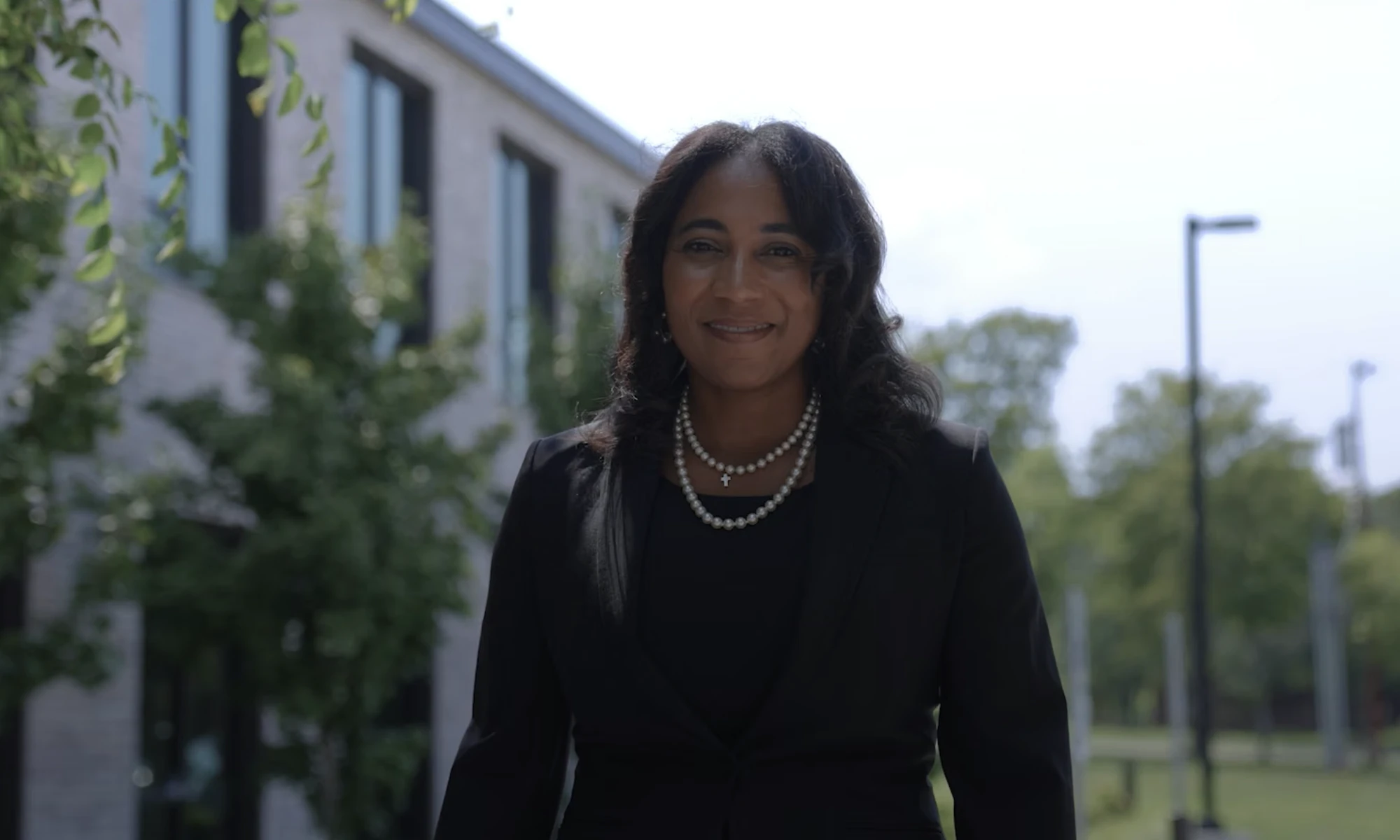
Judge Stephanie J. Williams – Judge, Fourth Circuit Court of Metropolitan Nashville and Davidson County
Judge Stephanie J. Williams has served on the Fourth Circuit Court of Metropolitan Nashville and Davidson County since September 2024. Her career is intertwined with the decisions that shape everyday life for children and families in Middle Tennessee. A unique perspective alone is not enough to make a gamechanger. It’s what you do with it.
In 2006, Williams secured state grant funding to establish the Family Justice Center, which provided reduced-fee legal representation to low-income families. Before taking the bench, she spent nearly nine years as Special Master of the Fourth Circuit Court. Williams teaches at Nashville School of Law and helped found Booked But Not Bound, a literacy initiative serving young people in Davidson County’s Juvenile Detention Center.
Judge Williams has spent her career helping families find affordable legal representation. She is not sitting idly by, but instead uses her unique vision and perspective on law to help others. Her nomination praises her dedication to “expanding access to justice and strengthening families throughout Middle Tennessee.” Her election also made her the first African American woman to serve as judge of Davidson County’s Fourth Circuit Court. On the bench, Judge Williams works with attorneys, mental health professionals, and community organizations to better serve children and families.
That commitment can be seen in the people Judge Williams teaches and mentors. At Nashville School of Law, she helps prepare future attorneys and serves as faculty advisor to the school’s Legal Aid Society. At each stepstone in her life, Judge Williams shares something practical: knowledge that can help another person find a way forward. Her nomination says these efforts have created “meaningful, lasting change for countless individuals and families.”
Williams’s story returns again and again to what becomes possible when someone understands the system before them and finds a person willing to help them through it. In the conversation below, Williams reflects on the encouragement that changed her life and how she carries that support into her work today.
The following interview has been edited for length and clarity.
What does it take to be a Gamechanger?
It is having vision that no one else can see, but sticking to that, believing in yourself, believing in your vision, and finding the people that will support you in that vision.
Who saw something in you before you saw it yourself?
My journey started as a young single mother who was a college dropout and working two jobs. I had the fortunate benefit to work for attorney Richard Manson. He saw something in me I did not see in myself, and he told me that I should go to law school.
That was a lofty goal for someone like me who was really just trying to make ends meet and raise two children. But those simple words were enough to motivate me to find a way, and that is what I did. I completed my bachelor’s degree by attending classes at night while I continued to work during the day, and then I was able to enter the University of Tennessee Law School.
Before taking the bench, you built a practice serving families with limited means. Why family law, and why those families?
Family law became my interest because I was personally impacted and affected by it. I wanted to represent individuals with limited means in their family law actions so that they could have affordable, accessible, and competent representation.
I saw in those courtrooms people that were just like me. They needed child support, or they needed to get out of a bad relationship, or they needed to have parenting time with their children. But they did not have tens of thousands of dollars to make that happen and to fight with.
Their needs were the same, their desire was the same. So I built a practice off of representing people at reduced prices, coupled with grants that helped to fund the work that I was doing.
How did that work lead you to the Fourth Circuit Court and eventually to becoming its judge?
Eventually, my work led me into the Fourth Circuit Court of Davidson County under Judge Philip Smith, working with him as his special master. That’s a term people often don’t understand, but I couch it as the little judge under the big judge.
Judge Smith passed in an untimely and unexpected manner. I was fortunate enough to be elected by the citizens of Davidson County to be Judge Smith’s successor. On Sept. 1, 2024, I became the judge of the Fourth Circuit Court, where I currently serve.
It was one of the most challenging journeys in my life, quite frankly. It was a lot of having to be comfortable being uncomfortable.
What does your work look like on an ordinary day?
I often tell people that the role of a judge, at least in the capacity in which I serve, is 90% behind the scenes and 10% on the bench.
I’m just the face of the Fourth Circuit, but I have a whole team behind me that supports me, that supports the vision, and that works hard every single day to go above and beyond to change the game of the dynamics in family law in our city.
Tell us about the Family Matters Community Enrichment Fund at CFMT. What does it make possible?
This fund has given us the opportunity to really carry out a mission that is beyond sitting on a bench every day and adjudicating cases. It’s about building people, strengthening people, strengthening families, educating.
Running for office meant telling your own story in public. What did that teach you?
None of us are perfect. We’re all very human. The more we can talk about the experiences that may bring us guilt or shame or embarrassment, the more we can free ourselves and the more we can help others.
I would not be in the position that I’m in now if I hadn’t faced those fears when I had to run for judge. I had to face them, and I had to talk about them. What was so wonderful is how it was received, how people encouraged me and supported me and felt like that was the beauty of my story that made me a good fit for this role.
This year’s theme is “Many Voices, One Movement.” What does that mean to you?
Many voices, one movement means to me that when you take the time to hear people and to listen to them, after collecting that information, you have to come up with one path, one trajectory to take that is going to serve the need.
Finish this thought: “I give because…”
I give because I believe what is given to me is given to me to pass on.
Join us each week as we celebrate each of our 2026 Gamechangers. Keep an eye out for their stories and the many ways these leaders show up every day to help build a thriving Middle Tennessee.
About Black Philanthropy Month
Celebrated each August, Black Philanthropy Month is a global observance of giving to and by people of African descent. It recognizes Black generosity in all its forms while inviting individuals, families, organizations, and communities to invest in Black-led change.
The 2026 theme, Many Voices, One Movement, reflects the idea that the strength of Black philanthropy comes from the people who carry it forward. Giving may take many forms, but it is united by collective care, community-led investment, and a shared commitment to justice and opportunity for Black people everywhere.
The theme also reminds us that this work does not belong to one person or organization. It grows when people come together to give, build, serve, and share their voices in support of a common purpose.
Since 2019, Community Foundation of Middle Tennessee has celebrated Black Philanthropy Month by highlighting Black leadership, connecting donors with Black-led organizations, and creating space for conversations about the future of giving in our region.
This year, CFMT will bring community members together for conversation, connection, and recognition of Black leaders shaping Middle Tennessee. Guided by Many Voices, One Movement, we will consider how donors, nonprofit leaders, businesses, families, and neighbors can each contribute to a stronger and more connected future for Black philanthropy.
