
North Nashville Arts Coalition
A Gallery in Six Frames
Like a gallery walk, this story moves through six frames, each revealing another part of the North Nashville Arts Coalition’s work, history, and vision for the artists who call the community home. Along the way you will meet Elisheba Mrozik, who found that when she could not find a place of her own, she found a community to help her build one.
We Are All Artists
North Nashville Arts Coalition
Exhibition statement
Every so often, while traveling along Dr. D.B. Todd Jr. Boulevard, Elisheba Mrozik would look up and see a painter at work.
Four or five floors above the street, the artist had squeezed a small easel and chair onto a balcony barely large enough to hold them. Surrounded by Nashville, he painted.
“You wouldn’t even see him if you didn’t look up,” said Mrozik.
For her, the painter is proof of something she has long known.
North Nashville’s creative energy is still here. It can be found in studios, schools, storefronts, kitchens, bedrooms, and sometimes on a balcony just large enough for an artist and his easel.
First Frame
Closed Doors
Mrozik arrived in Nashville in 2007 after graduating from Memphis College of Art. Eager to begin her career, she wanted to meet people and make an impression on the city’s arts community. More than anything, she wanted to make art.
“I wanted to burst into the art scene and be like, ‘Hey, let’s go,’ and I really found a lot of barriers,” said Mrozik. “I couldn’t get any galleries to talk with me.”
A few galleries eventually responded, but Mrozik said they often considered her work only during Black History Month or when they specifically needed Black artists. In the meantime, she built relationships through churches, daycares, and community organizations, taking on small projects wherever she could find them.
In 2010, she discovered a new passion in tattooing. There, she found another closed door.
To become a licensed tattoo artist in Tennessee, an aspiring artist must first complete an apprenticeship under a licensed tattooer. That requires finding an artist or shop willing to take them on.
As shop after shop turned her away, Mrozik began studying the rules for herself. She discovered that a person needed a license to tattoo, but not to own a tattoo shop.
That closed door, she realized, was not the only path forward.
“Nobody would let me into tattooing in Tennessee. As I started going into more shops, I was like, there are no people of any color. Everyone said no to me.”
Elisheba Mrozik
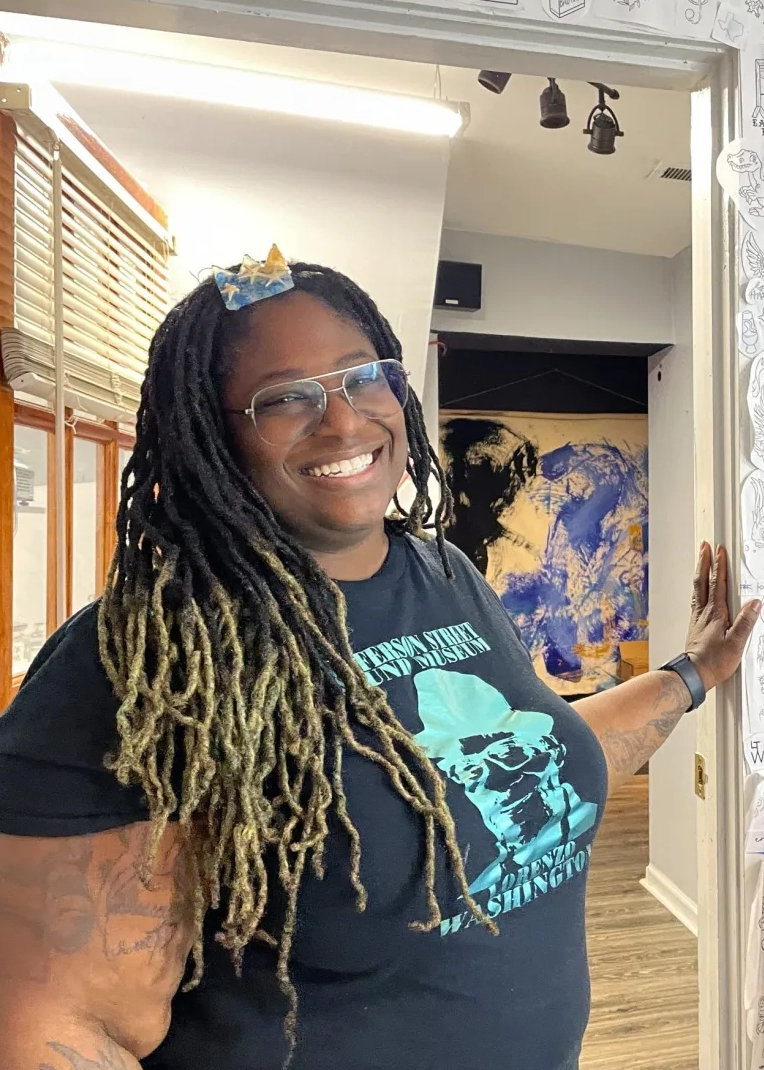
Elisheba Mrozik
Artist, tattooer, and president of NNAC
Second Frame
A Room of Her Own
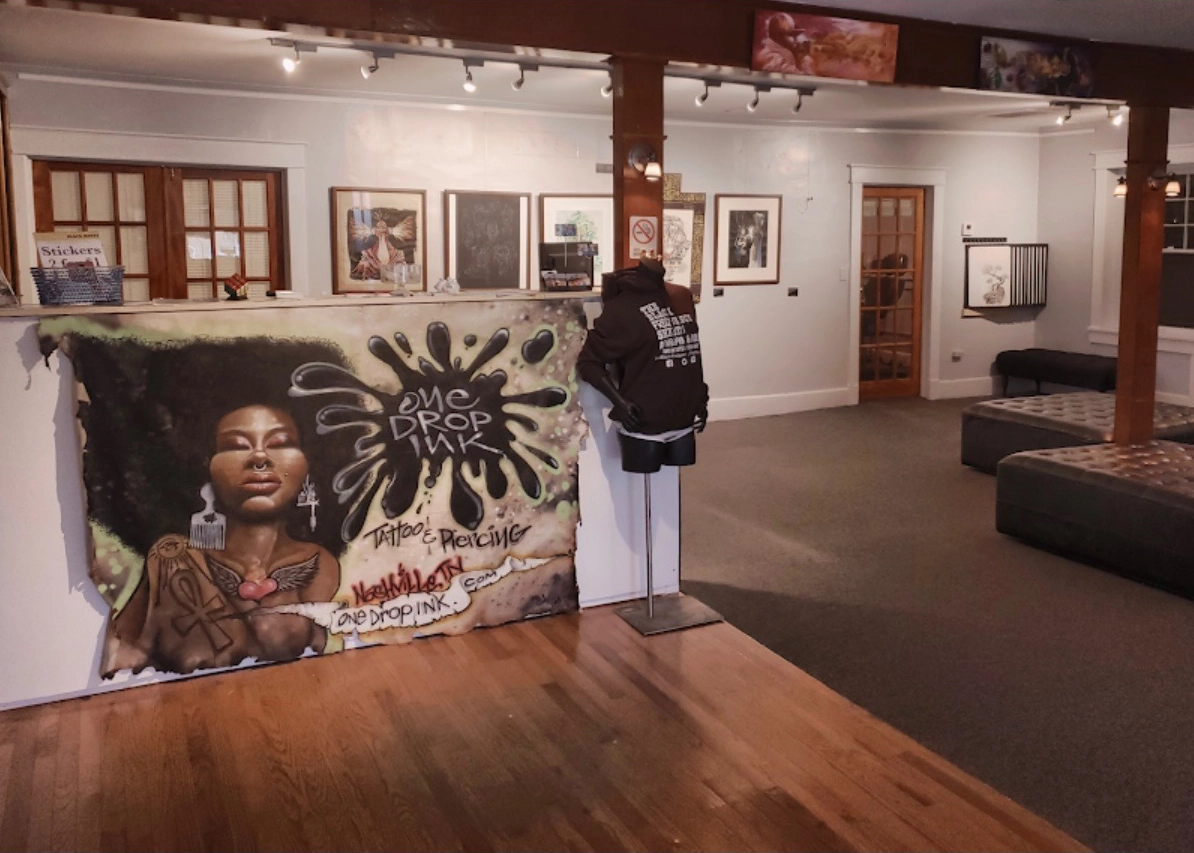
One Drop Ink
Founded on Jefferson Street in a 900-square-foot room
A first for Middle Tennessee
In the shop she opened to learn her craft, Mrozik became the first licensed Black tattoo artist in Middle Tennessee.
“I had to hire a tattooer,” said Mrozik.
She found a licensed artist who had stepped away from tattooing but was interested in returning to the work, and becoming her teacher.
“She was like, ‘I kind of want to tattoo again. I’ll work in your shop, and I’ll be your licensed artist so that you can learn,’” said Mrozik.
Using her income tax refund, Mrozik opened One Drop Ink in a one-room, 900-square-foot space on Jefferson Street.
“Jefferson Street offered me actual local owners of buildings who were Black and who gave me an opportunity,” said Mrozik. “Immediately, my space became kind of a mini art hub.”
Word spread. Artists began stopping by. Conversations with local creatives turned into small art events inside the 900-square-foot shop. Mrozik met local creatives such as Faxson Waters, who introduced her to more Black artists working throughout the community.
The room began to hold more than tattoo equipment. Its walls held art, ideas, and the beginnings of conversations that would lead to the creation of North Nashville Arts Coalition.
The place where Mrozik learned to tattoo became a place where Black artists could find one another.
Third Frame
Art on Jefferson Street
“It was a massive success. Hundreds and hundreds of people came out.”
Elisheba Mrozik
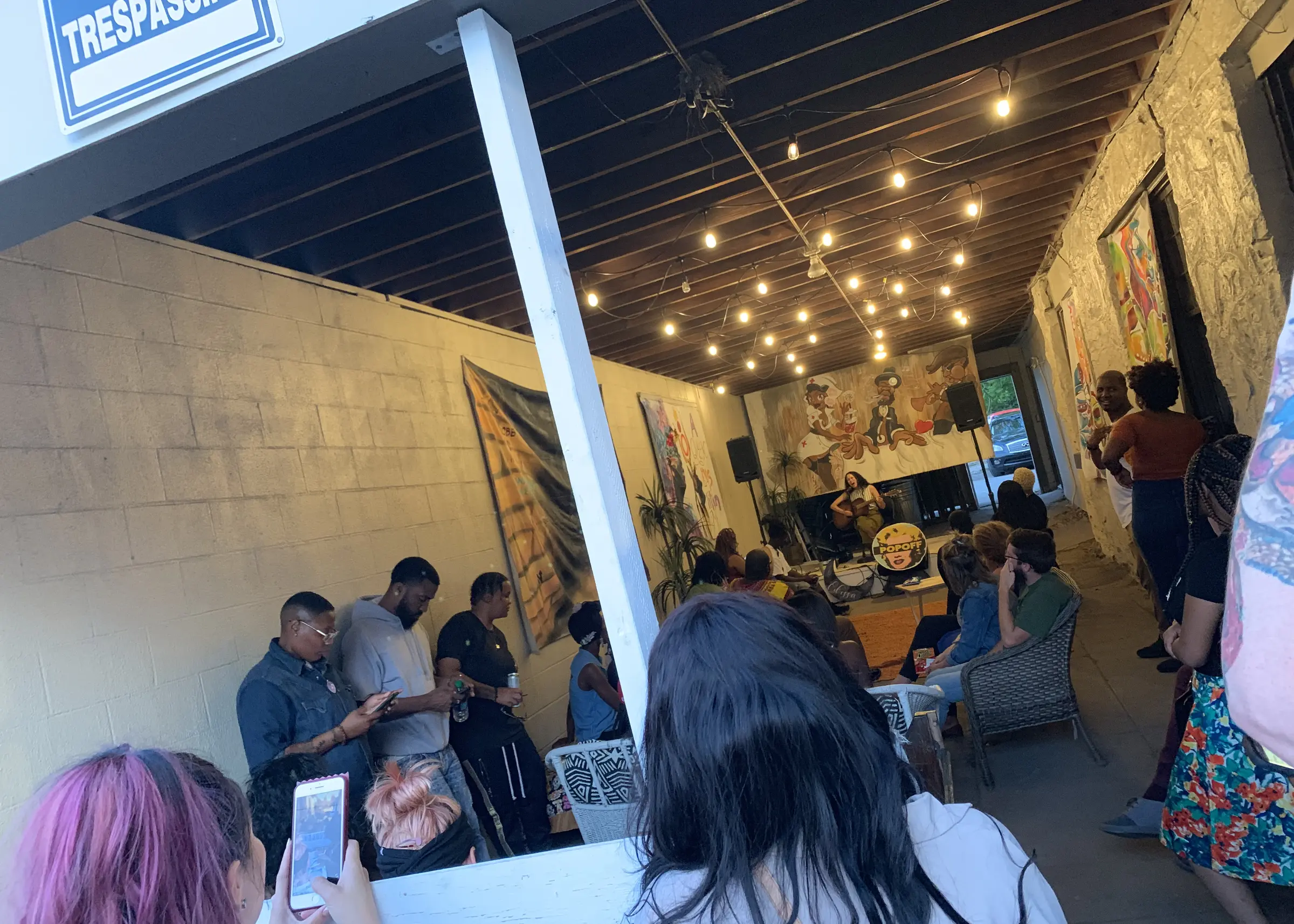
North Nashville Culture Crawl
Art, music, theater, and poetry across the community
“A lot of people had been coming and telling us that they, really good artists, still couldn’t get shows,” said Mrozik. “One day, it was about seven of us together, and we were like, ‘Okay, who all do we know that has space that we could possibly use?’”
They looked around Jefferson Street and began identifying the walls, rooms, and businesses already available to them. The answer became clear. They could create an art crawl of their own.
One Drop Ink, Woodcuts Gallery and Framing, and Garden Brunch Cafe became the first three locations. Each offered artists a place to hang their work and gave the community a reason to move from one space to the next.
The first Jefferson Street Art Crawl took place in June 2016.
Black artists displayed their work. They met new audiences. They sold pieces. What began as a single event soon became a monthly gathering.
As the crawl grew, One Drop Ink moved to a larger location at 28th and Jefferson. The new space offered enough wall space for a gallery, allowing Mrozik and other artists to exhibit their work more regularly.
A later location, housed in a former funeral home, offered even more room. A garage became a stage. Music, poetry, and performance joined the visual art already lining the walls.
The crawl was becoming a place where the community could rally around its artists.
Fourth Frame
From Crawl to Coalition
By 2018, Nashville artists began asking how the monthly crawls could become something more lasting. They had found an audience and created the space, but sustaining it would require structure.
The group formed the North Nashville Arts Coalition as a nonprofit organization. Because Mrozik owned one of the spaces and had helped guide the work from its beginning, she was chosen to serve as president.
None of them had much experience running an arts nonprofit. They learned as they went.
COVID-19 arrived. Events stopped, artists scattered, and the gatherings that had helped hold the coalition together became difficult or impossible. During the shutdown, Mrozik began rebuilding the organization. She assembled a new board, studied nonprofit management, and reconsidered what the coalition could become.
The Jefferson Street Art Crawl eventually grew into the North Nashville Culture Crawl. The new name reflected a wider view of both the community and the arts within it.
The work would no longer remain along one street. Artists would create activations throughout North Nashville, bringing visual art, music, theater, poetry, and performance into parks, businesses, schools, and neighborhood spaces.
The gallery walls were expanding outward.
“This was all volunteer. We were all just doing it because we were helping each other and other artists.”
Elisheba Mrozik
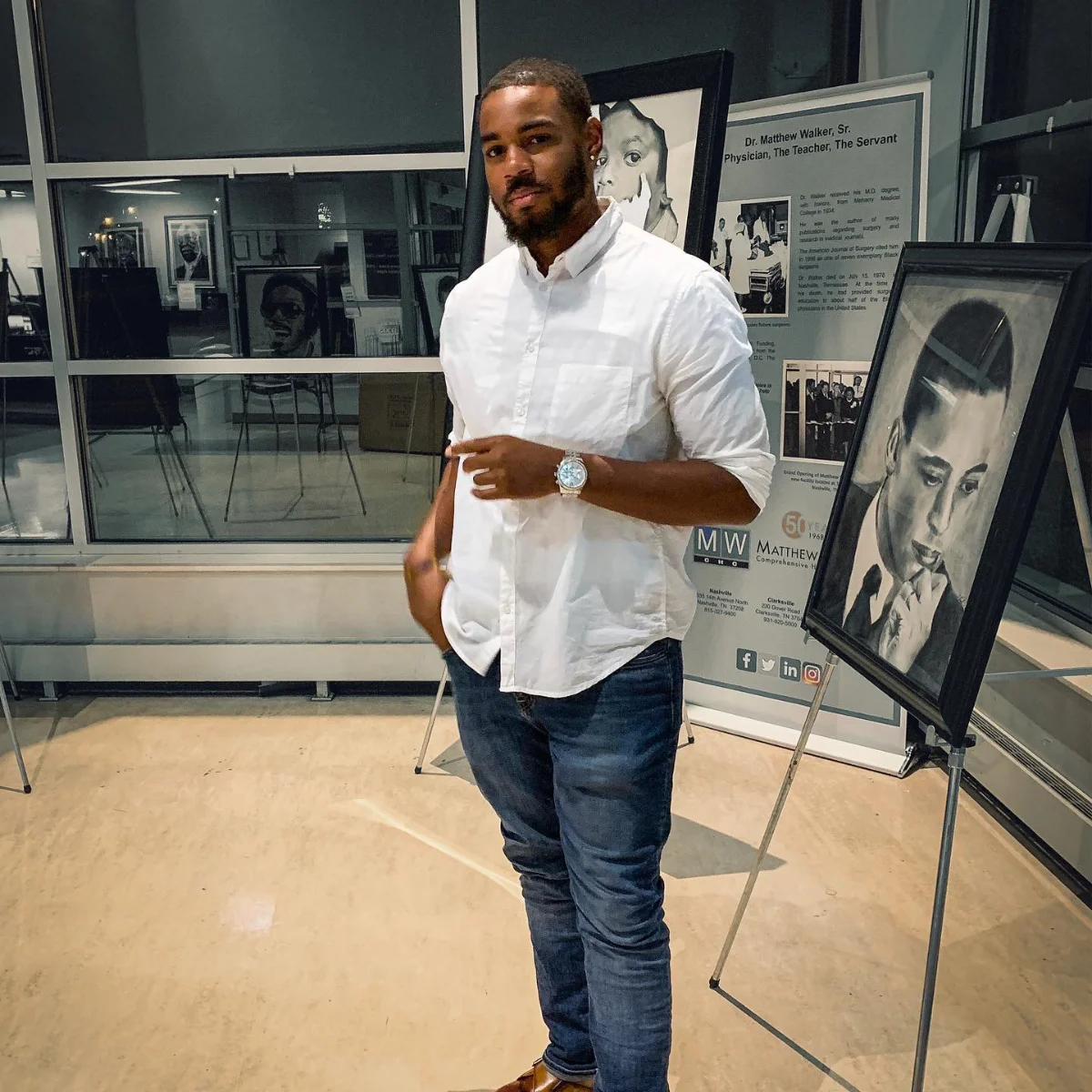
An artist with his portraits
Charcoal on paper · North Nashville
2016
The first Jefferson Street Art Crawl opens across three locations.
2018
The coalition incorporates as a nonprofit, with Mrozik as president.
2020
Through the shutdown, a new board and a new vision take shape.
Today
The North Nashville Culture Crawl carries art throughout the community.
Fifth Frame
Space to Create
As the coalition expanded, so did Mrozik’s understanding of what North Nashville’s artists needed.
A crawl could introduce artists to new audiences, provide paid work, and bring the community together. But supporting an artist for one event was different from helping that artist build a sustainable life.
“A lot of people have to do it out of their homes,” said Mrozik. “When I finally got a studio space that was not my home, that was a place where I could conduct business, meet with people, do studio visits, all of that, it boosted my career tenfold.”
A dedicated studio gave her a place to shut the door and focus. She could cover the walls with completed pieces and works in progress. She could invite people inside, meet potential clients, and allow them to see the time and thought behind what she created.
Without that kind of room, artists often work at kitchen tables, in bedrooms, or wherever they can carve out space. The demands of home remain close by, while the cost of materials, training, and larger projects can keep promising ideas from moving beyond an early sketch.
“So much of what a lot of artists do to live is the work they have to do to live,” said Mrozik. “What’s going to sell, instead of really looking at ideas that they want to bring to life.”
There is nothing wrong with artists making work people want to buy, she said. That work pays bills and keeps careers moving. But artists also need time and support to create without first asking whether an idea will sell.
Mrozik wants the coalition to become a stronger source of that support. That could mean connecting artists with paid opportunities, helping them pursue grants through fiscal sponsorship, or one day creating a permanent home where artists can work, meet one another, and share their work with the public.
Her larger dream is to give artists enough stability to earn a living while preserving the freedom to follow their own ideas.
“I really hate the struggling artist trope. Everything runs on the arts. Everything runs on creativity.”
Elisheba Mrozik
Sixth Frame
Art Without Walls
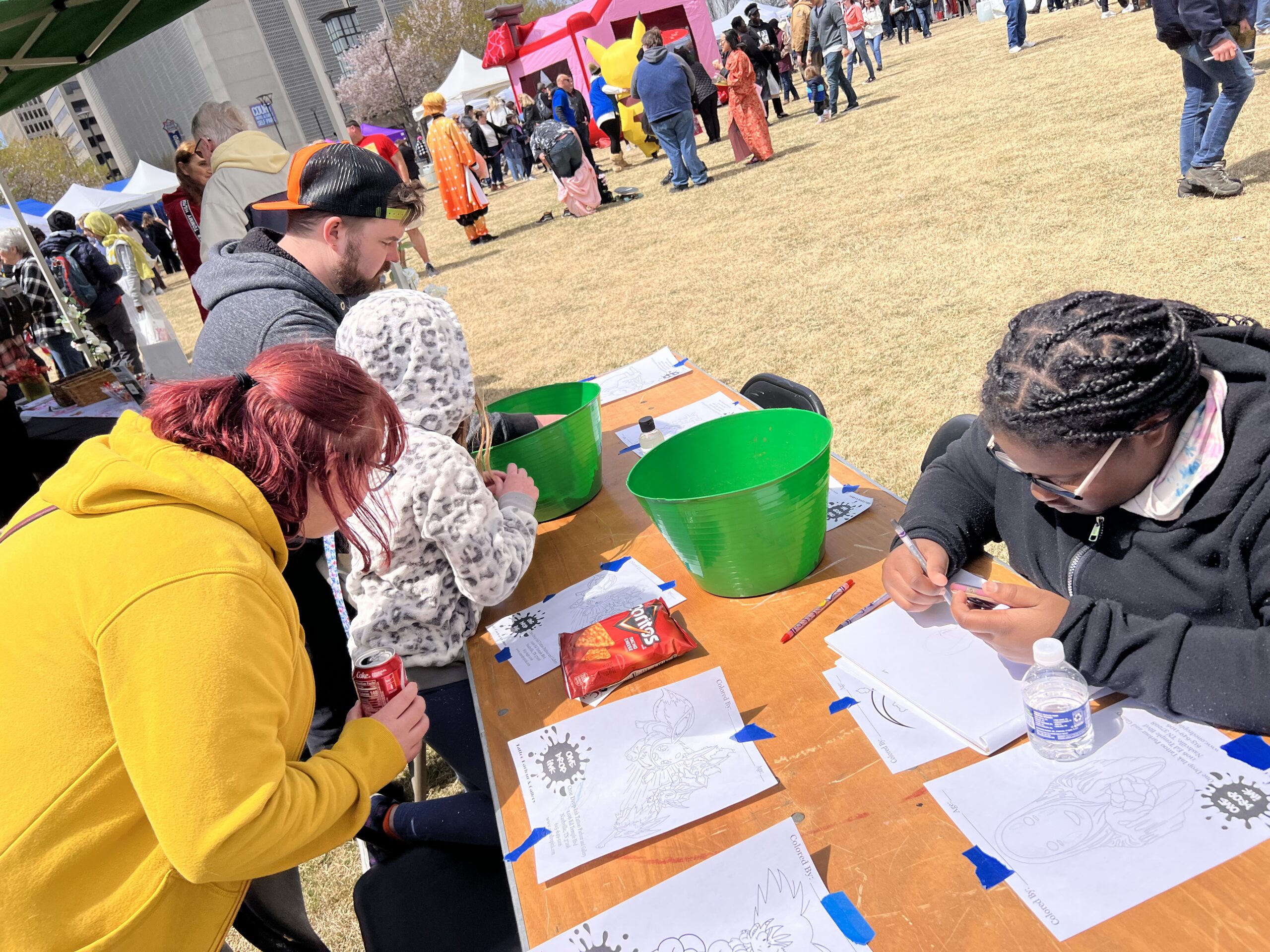
Mobile Ink Link
Coloring pages from One Drop Ink at a community festival · Nashville
North Nashville Arts Coalition is already working to close the distance between artists and the people around them.
Through the North Nashville Culture Crawl, artists create events and installations throughout the community. Some bring visual art. Others bring music, poetry, theater, or performances shaped around the places where they appear.
The artists determine what they want to create. The coalition works to make sure they are paid for sharing it.
The organization also brings artists into schools and community events through pop-ups known as Mobile Ink Link. Under tents, inside classrooms, or in the middle of existing gatherings, artists demonstrate their work, explain how it is made, and invite others to take part.
“People love it,” said Mrozik. “They’ll be like, ‘I’ve never seen a Black artist that does this type of art.’ They can explain what they do. They can show them a little bit of how they do it. They get to play with it, and they learn about something.”
Children gather around the artists, but so do adults and seniors.
The success of the pop-up events shows that people want more places where they can encounter artists, try something unfamiliar, and see creativity as something that belongs to them and their families.
Pop-ups provide income and introduce artists to new audiences, but they cannot offer the consistent work, affordable studio space, or long-term support many artists need.
At the coalition’s portfolio days, artists bring Mrozik sketches or the beginnings of projects they hope to complete. She can often see what the work could become. She also hears what stands in the way.
An artist needs more room. Another cannot afford the materials. Someone else needs a class to learn the skills required to finish the piece.
“The artists themselves and the community feedback fuel me to keep going,” said Mrozik.
That work has become more pressing as development, rising costs, tornado damage, and the pandemic have pushed artists away from North Nashville. Some have moved farther from the community that once supported them, taking their work and creative relationships with them.
Still, Mrozik sees no shortage of talent.
She sees a creative legacy carried through Fisk University, Tennessee State University, Jefferson Street, neighborhood businesses, and generations of artists whose work has not always been displayed where others could see it.
Nashville may be known as Music City, but Mrozik believes its identity should make room for the full range of artists working here.
“The dance here is amazing. The theater here is amazing. Nashville really should be Art City and not just Music City.”
Elisheba Mrozik
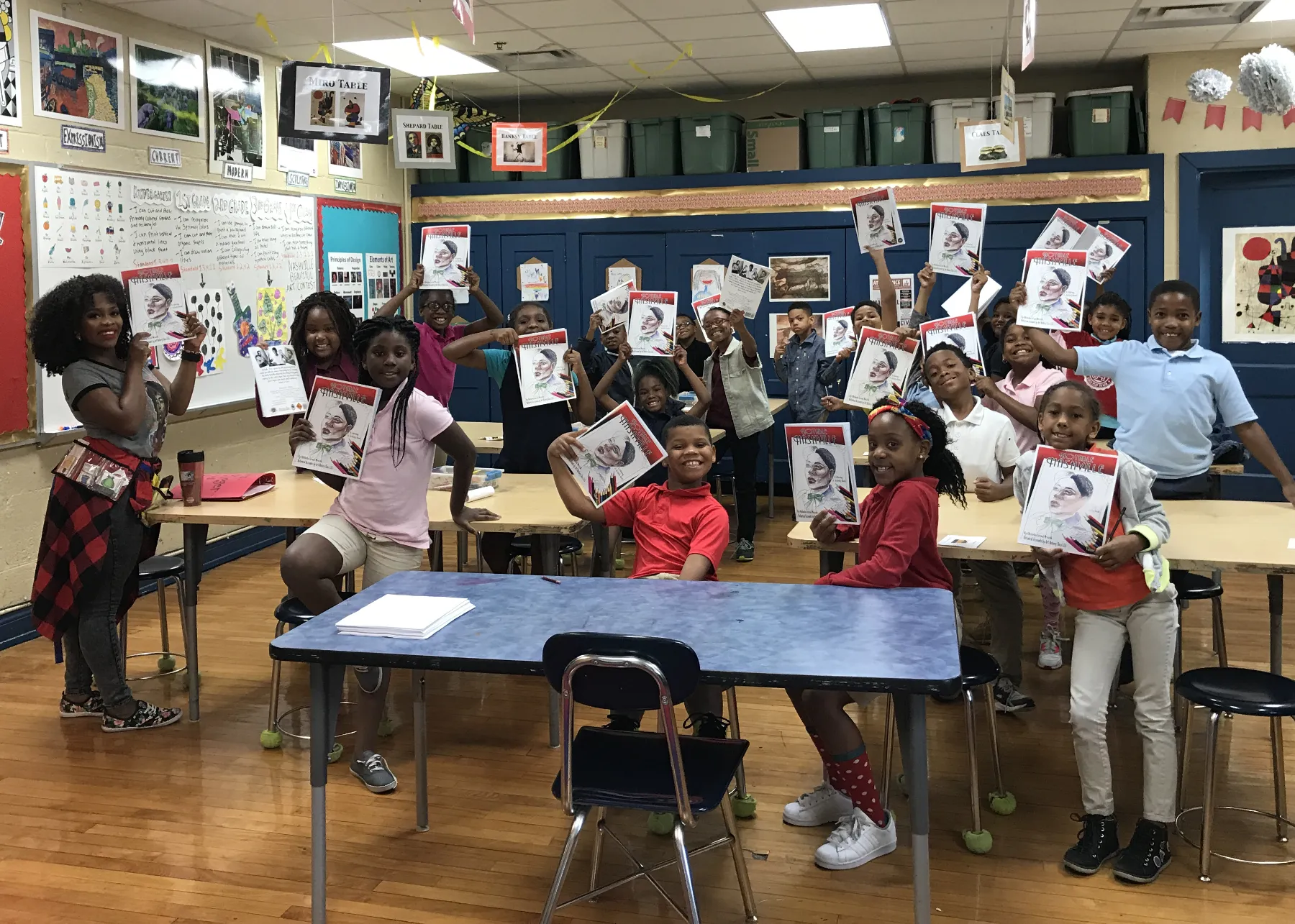
In the classroom
Students hold up artist-made coloring books during a school visit
Before you leave the gallery
Mrozik has not seen the painter or his easel on the balcony lately. She does not know whether he still lives there.
But she remembers the space he made for himself lofted above the sidewalks. A small place to let creativity flourish and art thrive in the fresh air. The city moving around him at the breakneck pace which cities like Nashville always move, washing over and by all its inhabitants.
“North Nashville’s artists are still here. The question is whether the city will look up, see them, and give their work room to grow.”
Elisheba Mrozik