
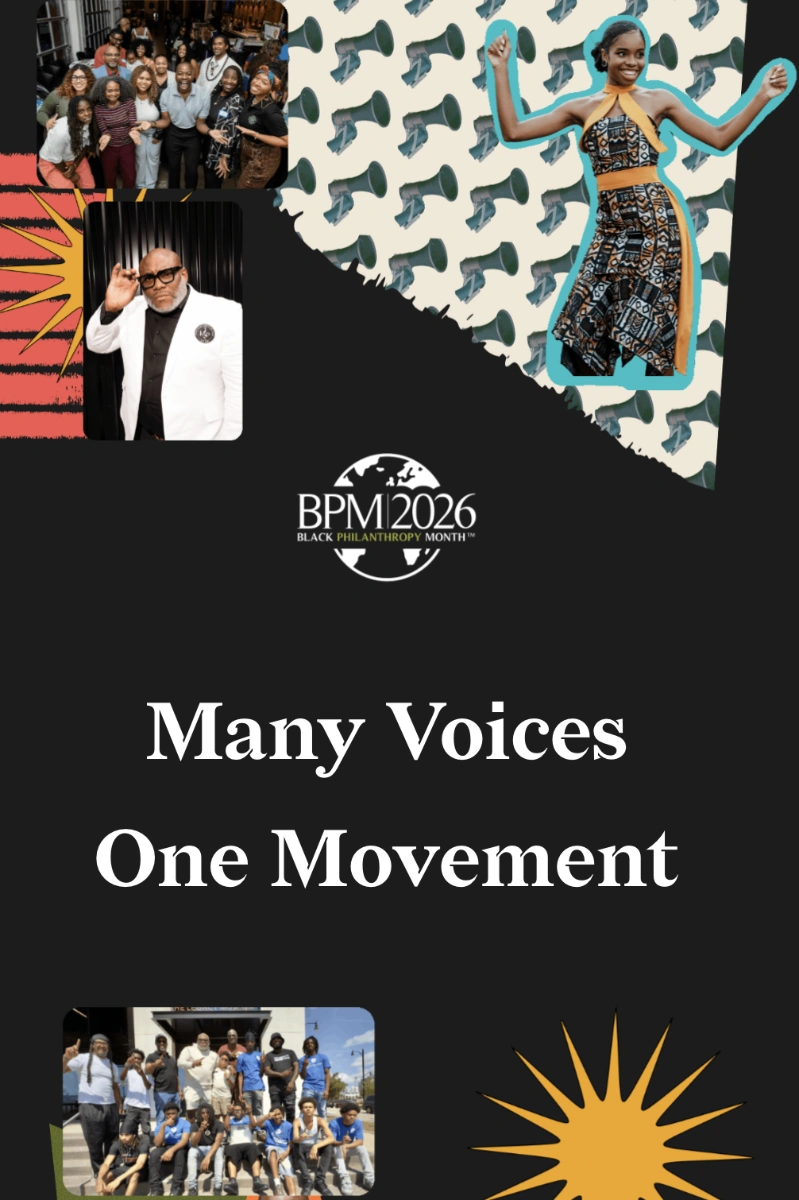
The 2026 theme for Black Philanthropy Month was “Many Voices. One Movement.” It honored the many people, communities, and forms of generosity that carry Black philanthropy forward.
The Gamechangers 2026 cohort reflect that range. Their work reaches across education, law, cultural preservation, youth development, recovery services, mental health, and spiritual life. Each has chosen a different path of service, but all are helping build a stronger and more connected Middle Tennessee. Over eight weeks, we will share an in-depth profile of each of our eight Gamechangers 2026 cohort, carrying the celebration from Black Philanthropy Month in August into National Philanthropy Month in November.
 play_arrow
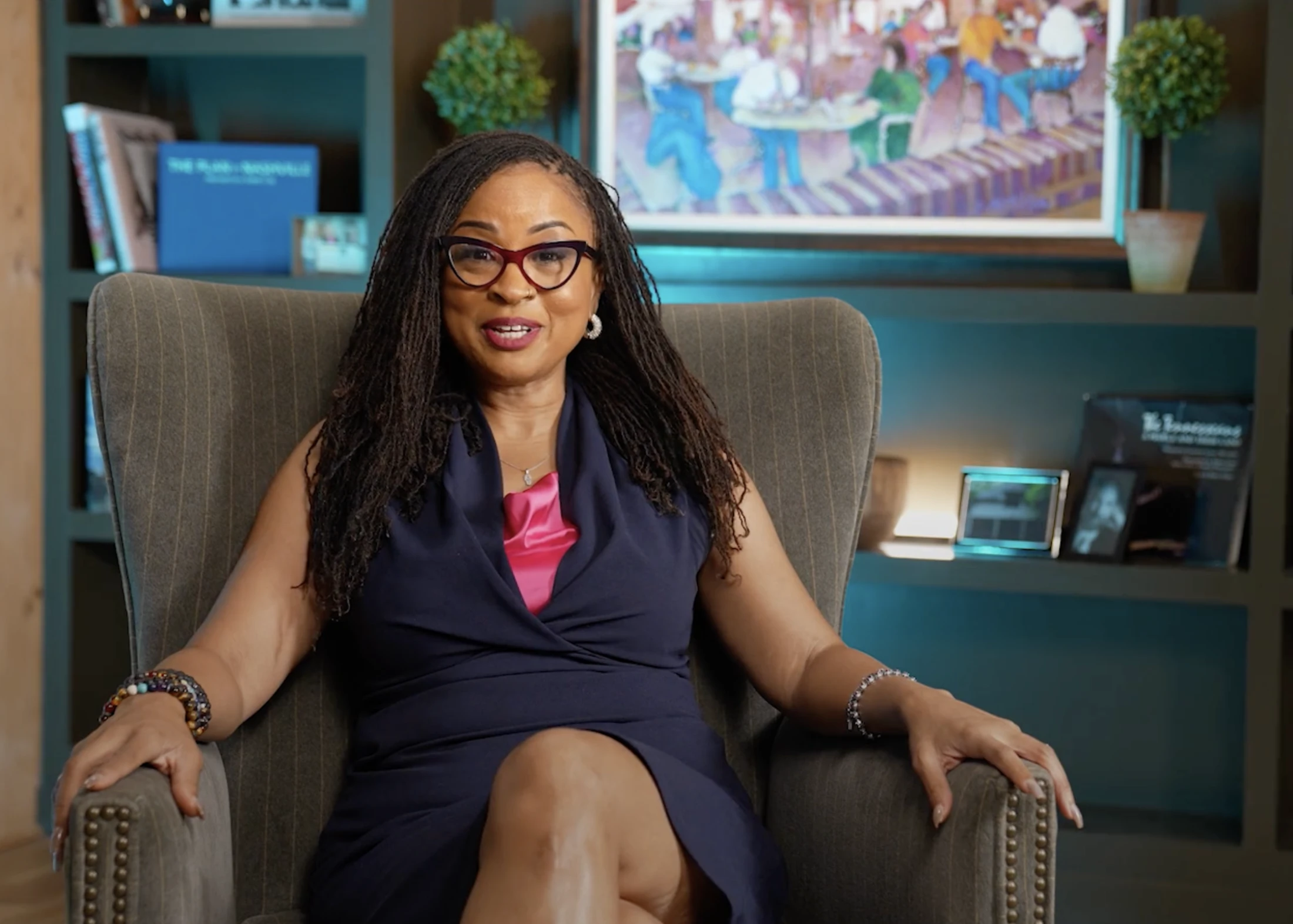
Tanisha “Tee” Wilson – Founder and CEO, B.E. Academy for Girls
Tanisha “Tee” Wilson founded B.E. Academy for Girls, the first new all-girls school to open in Nashville in more than 70 years. At 14, Wilson was sent home from school because her locks were considered distracting for others. At the time, she told herself she would not let this happen to other girls in the future. She had a plan.
Years later Wilson created the culturally responsive, STEAM-focused school she once needed herself. B.E. Academy opened with 13 girls in 2024, grew to 40 in 2025, and now welcomes 50 girls in its third year. There, girls of color are given space to heal, build confidence, and feel safe, seen, valued, and heard. Wilson also serves as communications manager for the John R. Lewis Legacy Institute.
The foundation of B.E. Academy for Girls is only part of Wilson’s story. Wilson’s Gamechanger nomination describes her as “a catalyst for collaboration across education, philanthropy, business, and community leadership” and credits her with creating opportunities that “extend far beyond the walls of B.E. Academy.” It concludes, “Tanisha Wilson is a visionary leader whose courage, innovation, and relentless dedication are leaving an indelible mark on Middle Tennessee. She is not simply changing individual lives; she is changing the educational landscape for generations to come.”
The following Q+A walks through the moment that Wilson’s spark occurred, and shows how a true gamechanger works to make a difference for her students, families, and the next generation. The following interview has been edited for length and clarity.
At 14, you promised yourself that you would open an all-girls school one day. Take us back to that moment.
When I was 14, I lived in New Orleans and attended an all-girls school. I wore my hair in big, chunky locks, much like I do today. I was told that I had to go home and take my hair down because it was distracting. I was humiliated. I wondered, “Why couldn’t I be accepted the way I was?”
When my mom picked me up from school that day, I told her, “I’m going to start my own school for girls, and this is not going to happen to my girls.” That dream stayed in my heart for well over 30 years.
What I needed was for someone to say, “You know what? It’s beautiful,” and accept me as I was. They could have said, “We’re interested in your hair. Let’s do a class lesson on the history of African American hair, locks, and braids.” That would have validated me while also educating my classmates and me.
It would have shown compassion, acceptance, and love. It would have shown that I was worthy, no matter which way the hair grew out of my head.
What moved B.E. Academy from a long-held dream into something you knew you had to build?
When my daughter was in eighth grade, she came home from school one day and said, “Mommy, I don’t want to wear braids anymore because they keep asking me about my hair.” She was the only girl of color in her school at the time.
For me, it was a wake-up call. It had been more than 30 years, and nothing had changed. Our girls were still dealing with the same issues. I kept asking myself, “Where do our girls go to be safe?”
I am the kind of person who, if there is a problem, will try to find a solution. B.E. Academy was that solution.
How has B.E. Academy grown since you opened its doors?
I finally stepped out on faith and decided to pursue my dream. In 2024, we opened our doors with 13 girls. In 2025, we expanded to 40 girls, tripling our enrollment in one year. This year, 50 girls are joining us for our third year.
Our school focuses on cultural identity, affirmation, relevance, and responsiveness in the classroom for girls of color.
You built a school where girls of color are not just admitted but centered. What changes in a girl when the room is finally built for her?
What I see in my girls is a lot of untapped potential and value that has not been recognized. I see strength, wisdom, and confidence that have not been nurtured.
I also see trauma, including educational trauma and things they have experienced at home. One of the first things we do at the academy is help our girls heal.
What is a win from this past year that people outside your world might never see?
I have parents texting me within two weeks of school starting and saying, “My daughter would barely speak before, and now she’s doing presentations in front of the whole church.”
That lets people know this is life-changing work. This is not just a school. This is literally changing lives, building confidence, and helping girls feel comfortable in their own skin.
Philanthropy is often pictured as writing checks. What does Black philanthropy look like in your life?
I have seen Black philanthropy in Nashville show up in so many ways beyond financial giving. At my school, I see it in the teachers who choose to teach at the academy. They are not doing it to get rich because we have a limited budget. They are doing it because they believe in these young women and in the mission of the school.
There are also so many organizations in our city that serve and love on Black girls and women, including Creative Girls Rock, Play Like a Girl, and DYMON Youth Development. These organizations work tirelessly to make sure girls in our community are safe, seen, valued, and heard.
They do not do it because they have a lot of money to give. They do it because it is what they were put on this earth to do. I am very happy to be counted among those women.
Finish this thought: “I give because…”
I give because one day there is going to be a young lady who looks back at her life and says, “It’s because of B.E. Academy that I made it.”
For the girl who has a dream she has not said out loud yet, what do you want her to know?
Speak it. Say it. Write it down over and over again. When you speak it, it becomes real. When you write it, it becomes real.
Do not let fear hold you back, because you can do it. Nothing beats a failure but a try. If you have a dream that you have not said out loud, it is time to be loud about it. It is time to let people know that you are here and that you will be successful.
To learn more about B.E. Academy and the work that Tanisha Wilson is doing visit www.beacademyforgirls.org.
Join us each week as we celebrate each of our 2026 Gamechangers. Keep an eye out for their stories and the many ways these leaders show up every day to help build a thriving Middle Tennessee.
About Black Philanthropy Month
Celebrated each August, Black Philanthropy Month is a global observance of giving to and by people of African descent. It recognizes Black generosity in all its forms while inviting individuals, families, organizations, and communities to invest in Black-led change.
The 2026 theme, Many Voices, One Movement, reflects the idea that the strength of Black philanthropy comes from the people who carry it forward. Giving may take many forms, but it is united by collective care, community-led investment, and a shared commitment to justice and opportunity for Black people everywhere.
The theme also reminds us that this work does not belong to one person or organization. It grows when people come together to give, build, serve, and share their voices in support of a common purpose.
Since 2019, Community Foundation of Middle Tennessee has celebrated Black Philanthropy Month by highlighting Black leadership, connecting donors with Black-led organizations, and creating space for conversations about the future of giving in our region.
This year, CFMT will bring community members together for conversation, connection, and recognition of Black leaders shaping Middle Tennessee. Guided by Many Voices, One Movement, we will consider how donors, nonprofit leaders, businesses, families, and neighbors can each contribute to a stronger and more connected future for Black philanthropy.