Helping Nashville’s Children Find Stability When Housing Falls Out of Reach
Nearly 4,500 children enrolled in Metro Nashville Public Schools (MNPS) have no reliable place to call home, a 27 percent increase from the previous year, according to Catherine Knowles, director of special population services for MNPS.
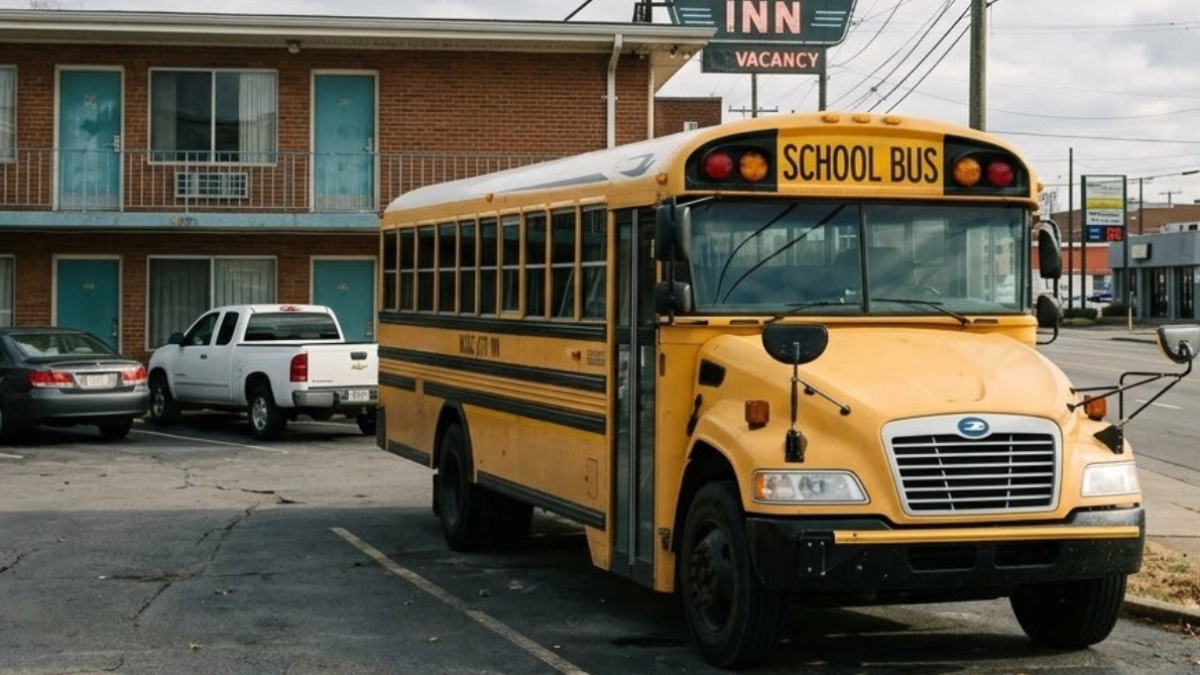
For many families, homelessness does not look like what people expect. It can mean living in a motel, doubling up with relatives, or sleeping in a car while trying to keep children enrolled in school. It is often hidden, and the issue is growing.
When Ken Larish, a member of Westminster Presbyterian Church, first learned how many children in Nashville’s public schools are experiencing homelessness, he had to stop and let the number sink in.
“There were a couple of times when our senior pastor, Donovan Drake, preached about it,” Ken recalled. “And I thought, that’s outrageous. There’s got to be something we can do.”
That’s where Home Together Nashville begins: a new initiative focused on helping families with school-aged children move from unstable living situations into consistent, safe housing while keeping children connected to their schools and support systems.
Building a Coordinated Response
Ken began working closely with HERO leadership and other local experts to develop a response that could provide both immediate relief and long-term stability. One of his key partners in that work is Judy Tackett, who brings years of experience advocating for people without housing.
“Children living in motels have higher rates of physical ailments like asthma,” Judy said. “It’s not just educational. It affects their physical health, their emotional health, everything. And the resources for housing subsidies simply aren’t there. If someone gets on a wait list, it can take up to two years just to receive a Section 8 voucher.”
Home Together Nashville focuses specifically on families with a recent history of living in motels and paying out of pocket. These are families who often earn too much to qualify for traditional assistance, but still can’t secure stable, affordable housing. They tend to fall through the cracks.
Will Wellman, director of theology and community initiatives at Westminster, helped bring HERO’s work into the church’s Sunday school classes. For Will, the stakes are both immediate and generational.
“Our hope is not only to help people right now and give them the means to find independence,” Will said, “but for that stability to carry forward so their children aren’t trapped in the same cycle.”
Alongside Will, Ken partnered with Lynne Trost, director of global business operations at Deloitte. Together, the three form the volunteer leadership team of Home Together Nashville, combining business experience, strategy, and community relationships to address student homelessness in a lasting way.
Launching the Pilot
The pilot is launching through landlord partnerships with Freeman Webb. Home Together Nashville is also building a wraparound support model with MNPS’ HERO program and Community Care Fellowship, and researchers at Vanderbilt University will help evaluate the program as it grows.
For Lynne, one of the most important priorities is ensuring housing solutions don’t uproot families from the schools and communities they already rely on.
“It’s our intention that the places we find for these families are near the schools their children already attend,” Lynne said. “That community is a layer of support in itself.”
Long-term commitment is intentionally built into Home Together Nashville’s model. The team knows that solving this isn’t a one-night fix, and often isn’t a one-year fix either.
“We don’t want to just say, ‘here’s a place to stay for a year,” Ken said. “A port in the storm is a good thing, don’t get me wrong. But what we want to say is: as long as your child is in the Metro Public School system, we’re going to be here for you.”
Ken believes there is a solution, and that Nashville has the resources to find it.
“There’s record vacancy in Nashville apartments right now,” he said. “You’ve got roughly a billion dollars’ worth of empty apartment assets sitting in Davidson County, and then you’ve got children in the public school system with nowhere to sleep at night. That gap shouldn’t exist.”
A Trusted Partner Behind the Scenes
As the pilot program takes shape, Home Together Nashville is partnering with Community Foundation of Middle Tennessee to build strong, responsible infrastructure while staying fully focused on the families they serve.
Through this partnership, CFMT serves as fiscal sponsor, ensuring strong stewardship, compliance, and transparency while allowing the initiative’s leaders to focus on serving families and refining the model.
“Partnering with CFMT allows us to focus entirely on the service model and the launch of a pilot program,” Judy said. “It gives us the flexibility and time we need before we determine how and where Home Together Nashville ultimately fits into the larger landscape of family services in this city.”
A History of Caring
This is not the first time CFMT has stepped in to help address homelessness in Nashville. More than a decade ago, our team helped administer House the Homeless, a short-term fund born from the vision of beloved Nashville journalist Gail Kerr and later championed in her honor by her husband, Les.
Like Ken, Les and Gail first came to understand homelessness in Nashville through their church, Downtown Presbyterian. Its ministry with unhoused and low-income neighbors drew them in, and Gail in particular. She and Les saw caring for their unhoused neighbors as a matter of shared humanity, and as Les put it, anyone can face a hard turn in life.
“When you talk to people experiencing homelessness, they are like you,” Les said. “They are smart. They have opinions about the world. They may have lived lives of enormous success.”
Before Gail’s passing, she had been in conversation with Judy Tackett about supporting How’s Nashville, a citywide initiative launched in 2013 to help people experiencing chronic homelessness move directly from the street into permanent housing. Gail’s idea was characteristically hopeful: “ten for ten in ten,” meaning raising $10,000 to help 10 people over 10 months through a move-in fund. She hoped it could become an annual tradition.
After Gail died, that dream didn’t fade. Les carried it forward in her honor, helping raise more than $50,000 for the flex fund supporting How’s Nashville. Those dollars covered real, tangible needs: security deposits, first month’s rent, utility deposits, pet deposits, and, in some cases, past-due rent.
For Les, CFMT’s involvement mattered because it brought trusted, responsible stewardship to work he and Gail deeply believed in.
“Having a home gives you not only self-esteem. It helps you find an identity,” Les said. “And if you can get a third party involved that has the best interests of the community at heart, that’s really how it all works best.”
And for Judy, who worked with the Metro Homelessness Commission at the time, she saw firsthand what that kind of coordinated response could accomplish. More than a decade later, she’s helping shape the next chapter as a part-time coordinator for Home Together Nashville, guided by an advisory board that includes partners from business, nonprofit, faith, and public education communities, including HERO leaders Catherine Knowles and Jami Oakley.
What Stability Makes Possible
For families, the impact of stable housing is deeply personal and simple. It starts with a door that closes. A bed that stays in the same place. A space that finally feels like it belongs to a child.
“I always think about what it means to feel at home as a kid, to have a sanctuary,” Judy said. “Having your own bedroom, your own space, that sense of home, is something so many of these children have never had. Creating that security makes a difference to the whole family.”
Home Together Nashville is working to ensure that more children in our community have that foundation.
Get Involved
Home Together Nashville is seeking partners, supporters, and community members who want to help expand access to stable housing for families with children in Middle Tennessee.
To learn more, partner, or support this work, contact Judy Tackett at [email protected]. To make a gift, visit CFMT’s giving page here or click the link below.