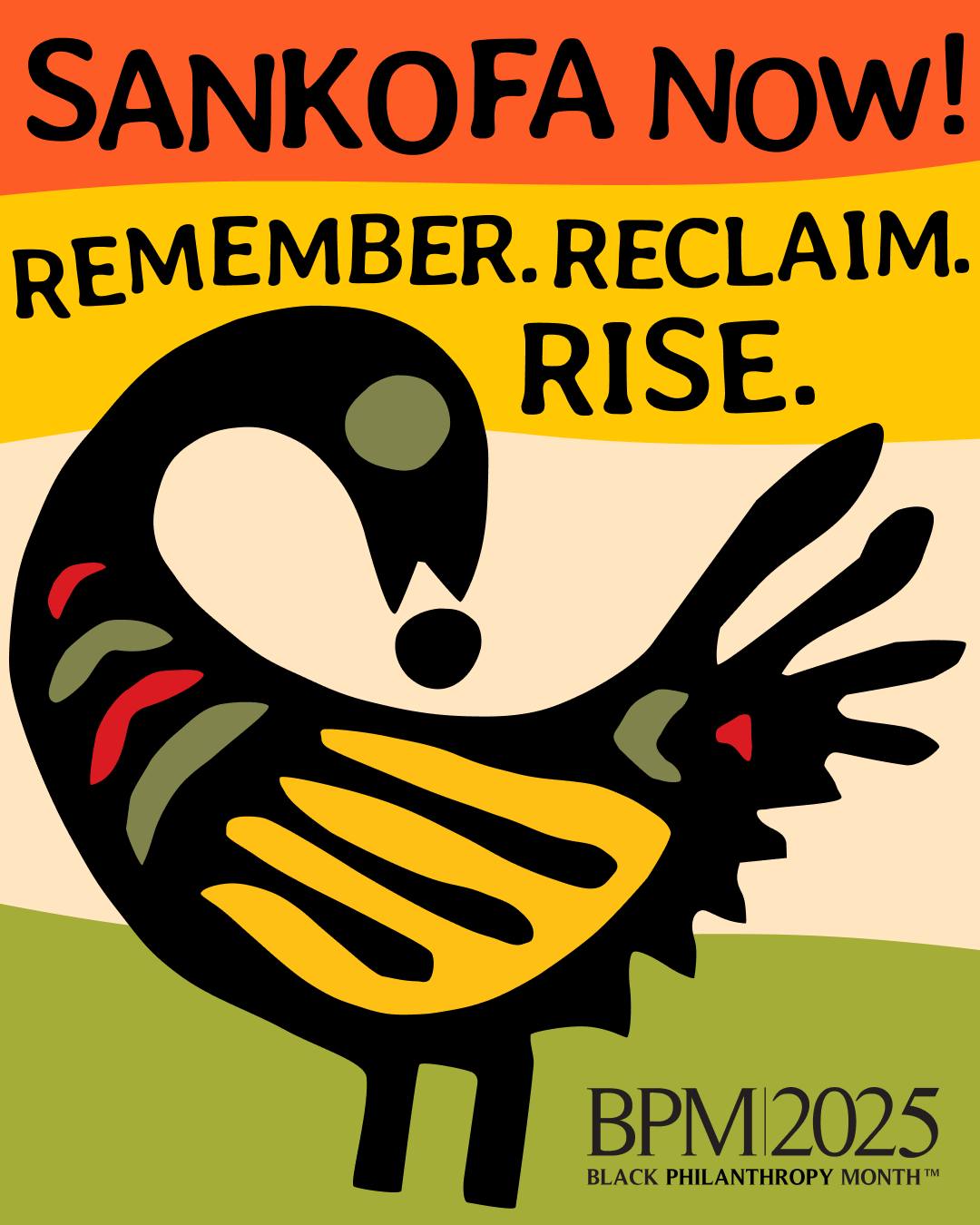
This August, in recognition of Black Philanthropy Month and the global call to honor the theme of Sankofa — a West African principle that urges us to “go back and get it” — we proudly welcomed the next class of Gamechangers: Black philanthropic leaders and bold collaborators shaping the future through innovation, generosity, and trust.
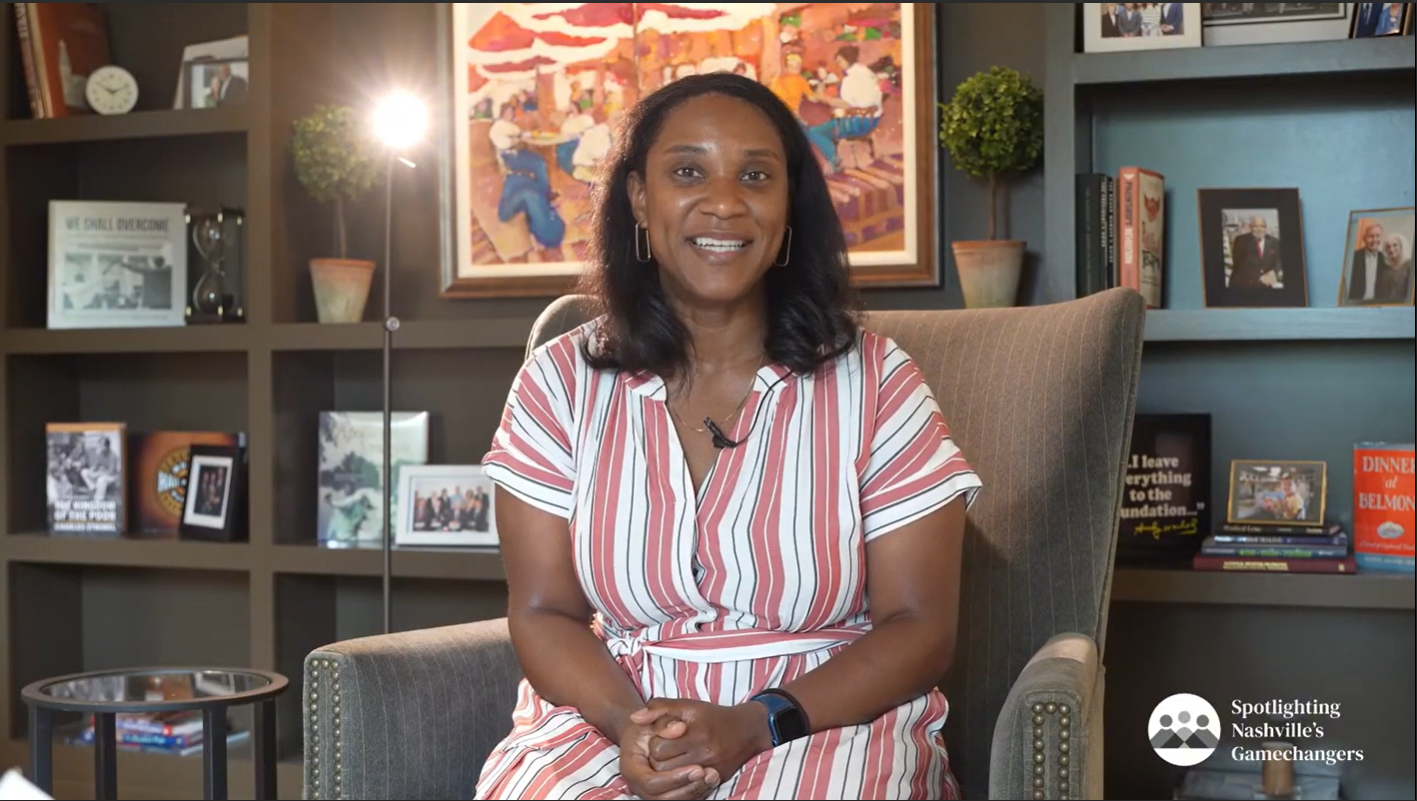 play_arrow
A Nashville native, Chandra brings experience to her role as Program Officer at The West End Home Foundation from both the nonprofit and commercial sectors, with past roles at Scarritt-Bennett Center, The Egly Agency, and Second Presbyterian Church. She is passionate about building intentional connections and partnering with underserved communities. Chandra earned her Master of Divinity from Vanderbilt Divinity School and her B.A. in German from Davidson College.
Tell us your story. (Your journey, your work, or what brought you to where you are today.)
I grew up in a family of pastors and social workers, where I witnessed intentional acts of service as part of daily life. From a young age, I saw what it looked like to care deeply for others—not just through words, but also through action.
In high school, I began to internalize more fully what it meant to be an active member of my community through a program called Nashville Youth PULSE (People United Leading and Serving Everywhere). Its mission was to encourage young people to engage deeply with their communities and to cultivate a lifelong commitment to service and volunteerism. Through PULSE, I volunteered with nonprofits across the city and started to see the inequities that shaped so many lives—how access to resources and opportunities was unequal, and how far too many people were being pushed to the margins.
At the same time, I encountered individuals and organizations working tirelessly to build a community where everyone is seen, valued, and has access to what they need to thrive. Being part of PULSE was one of the most formative experiences of my adolescence. It reinforced what I had witnessed growing up: that intentional acts of service, however small, can make a lasting impact. It also ignited in me a lifelong pursuit of what it means to live in community and to work actively for equity and justice.
That commitment continued into college, where I was a Bonner Service Scholar at my small liberal arts school. The Bonner program emphasized the importance of creating change through community engagement and service. The thread of community partnership and service that was woven into my formative years has remained a central thread throughout my life and career.
My entry into the field of philanthropy was an unexpected but welcome opportunity. A colleague of my husband’s reached out to tell me about an open program officer position. As I learned more about the foundation—its focus on older adults, its values, and the broader philanthropic landscape—I became genuinely excited about the potential to contribute in this new way.
Today, I’m deeply grateful for the opportunity to advance aging with dignity and strengthen communities through my work at The West End Home Foundation. Over the past four years, I’ve gained a deeper understanding of the critical gaps in resources and supportive services that too often prevent aging with dignity. We all deserve to be valued and empowered as we age –and to have access to the care and support needed to thrive across the lifespan. I look forward to continuing this work to make our community more age-friendly and to collaborate across sectors in building a strong, inclusive infrastructure that can support all of us, as we grow older.
Name a person, tradition, or community value from your past that guides how you give or serve today.
A tradition that deeply shapes my life is my faith. It compels me to consider what it truly means to love my neighbor—and to wrestle with how to live out the call to justice, mercy, and radical hospitality. These guiding tenets remind me that I am deeply connected to my neighbor and the larger community, and they require me to be actively engaged in building a more just and compassionate world. A world where we recognize each person’s inherent dignity and worth, and where we care for one another in meaningful, tangible ways.
My faith teaches me that the pursuit of justice is never finished—it calls me to keep showing up, often imperfectly, again and again. Part of that journey includes acknowledging how I am complicit in systems and structures that have historically pushed community members to the margins.
My hope is that by listening to and learning from community leaders, building relationships rooted in trust and mutuality, and doing my best to support and amplify efforts that lead to systemic change—especially in under-resourced communities.
Sankofa teaches us to look back so we can move forward. If you could speak to your younger self or to future generations of Black gamechangers, what lesson or moment from your past would you share?
If I could speak to my younger self—or to future generations of Gamechangers— I would say this: stay open. Be willing to take risks, pivot, and embrace change. I’ve always been someone who values structure, planning, and preparation. I like to know what’s coming and to feel ready for it. However, some of the most meaningful opportunities and experiences I’ve had were the ones I did not see coming — the ones that were not part of the plan. The path may not look like you thought it would — but often, that’s exactly where the growth and impact happen.
One more piece of advice: find your people. Surround yourself with companions on the journey — those who share your values, challenge you to grow, and walk with you through both the hard and hopeful moments. I believe that we are meant to take care of one another and to carry this work together.
None of this advice is new or particularly groundbreaking, but sometimes we need to remind ourselves of the simple truths that can help ground us.
The parable of the talents teaches us to grow and share what we’ve been given. How have you used your gifts — whether time, talent, or resources — to make an impact in your community?
I believe the most meaningful gift I offer is my time. With two working parents and three busy children, our family life is full — but we make it a priority to show up for our community. One of our core family values is that being part of a community means finding ways to contribute. My husband and I do our best to lead by example — showing our children what it looks like to be active, engaged members of our community.
We are trying our best to raise children who feel deeply connected to their community — who see themselves not just as individuals, but also as part of something bigger. We hope they grow to feel both the desire and responsibility to give back, to show up, and to care for one another. We want them to feel compelled to help build a world where the table is wider — more diverse, more inclusive, and where everyone has a seat and a voice.
How have you seen Black generosity and community investment show up in ways that might not always be recognized as philanthropy?
When I think about Black generosity and community investment, my mind immediately turns to my experiences within faith communities. I have witnessed countless moments where church members came alongside one another — offering time, resources, and care to meet not only an individual member’s needs but also the broader needs of the community.
Black churches have long served as vital community hubs—places of refuge, nourishment, organizing, and empowerment. While no faith community is without flaws — and I acknowledge the harm that some have experienced in these spaces — I have also seen some of the most profound, transformative acts of generosity unfold in these very places. Often done quietly, without recognition, these acts are rooted in deep love and a commitment to collective care.
How do you define “being a Gamechanger” in collaborative efforts or philanthropy?
To me, being a Gamechanger in collaborative efforts or philanthropy starts with listening to communities. It means recognizing and honoring community leaders as the experts and amplifying the work that is already in motion. My role is to use whatever resources I have — whether time, relationships, or funding — to support and strengthen those efforts.
Being a Gamechanger is also about bringing people together across sectors to share ideas, align resources, and take action. No one sector can do it alone and we will be most successful when we are open to learning from one another.
I’m especially grateful to be part of a philanthropic community here in Nashville that is thoughtful, intentional, and challenges me to grow and learn. My colleagues are wise, deeply committed, and willing to take risks in pursuit of removing barriers and creating a community where we can all thrive. I am humbled to be considered a Gamechanger alongside so many community leaders who I look up to and deeply respect. I hope I continue to live up to this honor through my commitment to work towards meaningful change.
What wisdom or encouragement would you share with someone in Nashville who’s just beginning their journey here locally as a philanthropist or community leader?
Nashville is rich with history, wisdom, and lived experience. It is critical to take time to build relationships rooted in trust, respect, and mutuality.
Nashville is an incredibly generous community, so don’t hesitate to reach out to others, ask questions, and engage in honest conversation. There’s so much to learn from those who’ve been doing the work, both visibly and behind the scenes. Be open, be curious, and don’t be afraid to ask for help.
At the same time, trust your own lived experience and the knowledge you carry. You have something valuable to offer. Don’t be afraid to speak up, share your perspective, and contribute your wisdom to the collective work. We need diverse voices and leadership to build inclusive and equitable communities.
What are you curious about, excited to see unfold, and/or looking forward to initiating over the next year?
I’m hopeful that advocacy will continue to grow — both in the grassroots work happening on the ground and in the funding that supports it. I see more foundations beginning to lean intentionally into advocacy, and I’m excited to see how that might not only strengthen the incredible work already underway across the city, but also create new opportunities for long-term, sustainable impact.
Since entering the philanthropic sector, I’ve witnessed some encouraging shif — toward deeper listening, streamlined application and reporting processes, more unrestricted and multi-year funding, and a stronger emphasis on relationship-building over transactional engagement. These changes give me hope, and I’m excited to see how we continue to re-imagine what philanthropy looks like.
Looking ahead, I’m eager to find more opportunities for cross-sector collaboration — spaces where philanthropy, government, nonprofits, grassroots organizers, and the private sector can come together to co-create solutions. I believe real progress happens when we break out of our silos and align our efforts, and I’m excited to be part of conversations and partnerships that will, hopefully, move the needle in meaningful, lasting ways.
Black Philanthropy Month: Sankofa Now!
The past holds the key to our future. As we navigate growing challenges, we must draw strength from those who came before us. For this year’s Black Philanthropy Month recognition, we must:
- Remember our philanthropic roots, built on collective care and community-driven investment.
- Reclaim our power to shape the future, ensuring Black-led change is not just recognized but sustained.
- Rise by reinvesting in our people, our movements, and our solutions, because the future of Black philanthropy (and all humanity) depends on what we do today.
A thriving Black community benefits everyone. The fight for equity, opportunity, and justice strengthens our collective future, creating a world where all can prosper. Black philanthropy has always been a catalyst for change. In a time when progress is at risk, we need all hands on deck.