This August, in recognition of Black Philanthropy Month and the global call to honor the theme of Sankofa — a West African principle that urges us to “go back and get it” — we proudly welcomed the next class of Gamechangers: Black philanthropic leaders and bold collaborators shaping the future through innovation, generosity, and trust.
 play_arrow
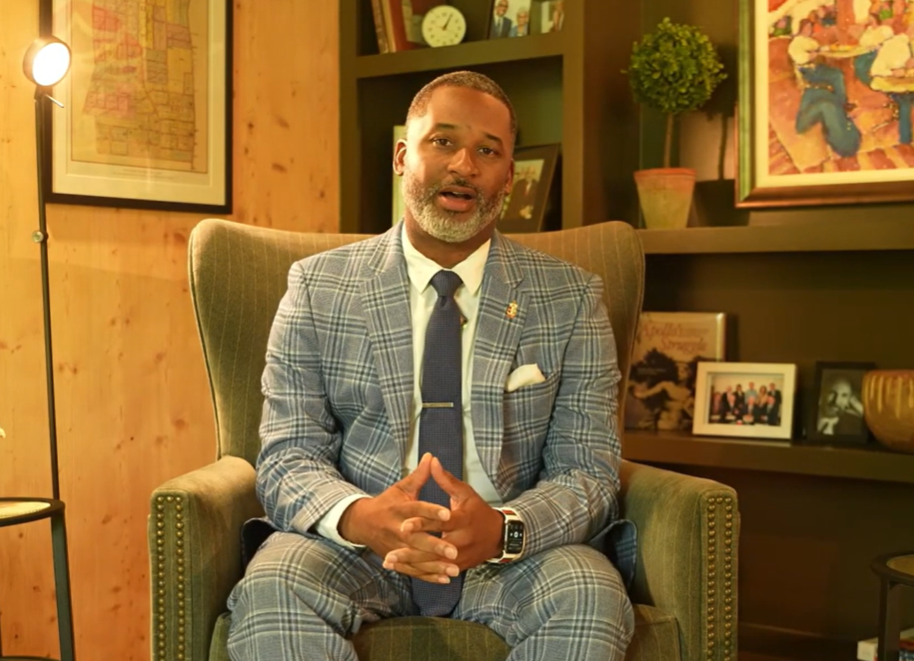
A Nashville native raised in the Bordeaux community, Lonnell has over 19 years of experience in youth development, nonprofit leadership, and public service. He’s served on the Metro Council (where he made history as the youngest African-American member), led youth programs with the YMCA, and built a reputation for connecting community needs with meaningful solutions. Lonnell holds a degree in Accounting and Business Law from Tennessee State University.
Tell us your story. (Your journey, your work, or what brought you to where you are today.)
I, the Honorable Lonnell Matthews, Jr., stand as a transformative force in Nashville’s civic landscape — a leader who understands that true progress requires both vision and the courage to act. Since my historic election in 2018 as Davidson County’s first African American Juvenile Court Clerk, I have redefined what it means to serve justice with both precision and compassion.
My journey began at Tennessee State University, where I earned my foundation in Accounting and Business Law, but my real education came from fifteen years with the YMCA of Middle Tennessee. Rising to District Executive Director of Youth Outreach, I learned that lasting change happens one young person at a time — a lesson that would shape everything that followed.
At 27, I made history as the youngest African American elected to Nashville’s Metro Council, representing District 1. But age was never a barrier; it was fuel. Over eight transformative years, I didn’t just hold positions — I wielded them. As Speaker Pro Tempore, Budget & Finance Chair, Education Chair, Parks & Recreation Chair, and Black Caucus President, I authored legislation that moved Nashville forward: the city’s first Procurement Nondiscrimination Program, Nashville’s first Small Business Incentive Program, and Domestic Partner Benefits. Through my leadership on the Nashville After Zone Alliance’s Leadership Council, I ensured that opportunity for youth didn’t end when the school bell rang.
When Mayor Megan Barry appointed me Director of the Mayor’s Office of Neighborhoods & Community Engagement in 2015, I transformed how Nashville listens to its people. I architected hubNashville, revolutionizing the city’s 311 system, and orchestrated critical conversations through the 2016 Youth Violence Summit and Race, Equity, and Leadership (REAL) Dialogues. My fingerprints are on the P.O.W.E.R. Youth Internship Program and the Juvenile Restorative Diversion Program — initiatives that prove justice and healing can coexist.
As Juvenile Court Clerk, I have reimagined what’s possible when data meets heart. Working alongside Juvenile Court Judge Sheila Calloway, I secured funding for the groundbreaking Nashville Youth Campus for Empowerment — a trauma-informed ecosystem featuring a Juvenile Justice Center, 24-hour Youth Assessment Center, and Family Services Center. Currently serving as 2025 President of the Middle Tennessee Division of the Tennessee State Court Clerks Association, I’m not just reforming Nashville’s approach to youth justice — I am modeling it for the state of Tennessee.
Beyond the courthouse, I co-founded the My Brother’s Keeper Nashville Partnership, extending the Obama Foundation’s mission to lift up Black and Brown boys right here in Music City. My board service spans Leadership Nashville, Book ‘Em, Metro Health’s Community Safety Initiative and the Nashville Public Library Foundation — because I know that strong communities require strong institutions.
When I’m not reshaping justice or mentoring the next generation, you’ll find me behind the DJ booth, in the kitchen perfecting my latest recipe, or planning our next family adventure with my wife Johari and children, Ari (11) and Pilar (9). My commitment to Temple Baptist Church and the Nashville Alumni Chapter of Kappa Alpha Psi Fraternity reflects a man who understands that leadership is about service, not spotlight.
I’m not just making history — I’m making tomorrow better for every young person who walks through Davidson County’s neighborhoods seeking justice, opportunity, and hope.
Name a person, tradition, or community value from your past that guides how you give or serve today.
When I think about the person who most shaped how I give and serve today, I think of my grandmother, Susie Matthews. She was the one who first introduced me to faith, not just as a belief, but as a way of living with hope and resilience. She had a gift for making people feel seen and capable — she convinced me at a young age that anything I set my mind to was possible. But what stood out even more was how she extended that same belief to everyone she encountered. She had a way of bringing out the best in people, reminding them of their own worth and potential. That example has stayed with me, and it drives the way I try to show up for others —especially for young people. Just as she poured belief and encouragement into me, I strive to do the same, helping our youth see that they, too, can achieve greatness.
Sankofa teaches us to look back so we can move forward. If you could speak to your younger self or to future generations of Black gamechangers, what lesson or moment from your past would you share?
If I could speak to my younger self—or to future generations of Black gamechangers — I would remind them to be mindful of the company they keep. The people you surround yourself with will ultimately influence the person you become. When I look back, I can see how certain friendships and circles either pushed me toward growth or tempted me to settle for less than my potential. Every great accomplishment in my life has been connected to being in the presence of people who challenged me, encouraged me, and held me accountable.
The lesson is simple but powerful: choose wisely who you allow into your space. Your circle can either limit you or launch you. Surround yourself with people who believe in your dreams, who share your values, and who bring out the best in you — because iron sharpens iron. That awareness is what I would carry forward, and what I hope future generations of leaders embrace as they walk their own paths.
The parable of the talents teaches us to grow and share what we’ve been given. How have you used your gifts — whether time, talent, or resources — to make an impact in your community?
The parable of the talents reminds us that what we’ve been given is meant to be multiplied and shared, not hidden. For me, one of my greatest gifts has been the ability to “connect the dots.” I’ve learned that progress often comes not just from what one person can do, but from what happens when the right people, ideas, and resources are brought together.
In my community, I’ve used this gift to bridge relationships across sectors — whether that’s connecting educators with advocates, pairing young people with mentors, or bringing civic leaders together around solutions. Time and again, I’ve seen how a simple introduction or convening can spark collaboration that leads to real impact. I view this ability as my contribution to the greater good: making sure people don’t work in silos, but in partnership, so that we can all move forward together.
How have you seen Black generosity and community investment show up in ways that might not always be recognized as philanthropy?
When I think about Black generosity and community investment, I think about the dinner table. For generations, Black families have turned their tables into living examples of the parable of the two fish and five loaves. No matter how little there was, there was always enough to share. I’ve seen families stretch a meal so that anyone who showed up — a neighbor, a friend, even a stranger — would not leave hungry.
This practice might not be labeled as “philanthropy” in the traditional sense, but at its core it embodies the same principle: generosity. It is the belief that we are responsible for one another, that abundance can be found in community, and that sharing what we have strengthens us all. To me, the Black dinner table is one of the purest and most enduring expressions of philanthropy in our culture.
How do you define “being a Gamechanger” in collaborative efforts or philanthropy?
For me, being a Gamechanger in collaborative efforts or philanthropy means creating impact that lasts beyond yourself. It’s not about being the loudest voice in the room or the one who gets the credit — it’s about shifting the conditions so that others can win, too. A true Gamechanger knows how to listen, how to bring people together across differences, and how to turn individual contributions into collective progress.
In philanthropy, that means moving resources, relationships, and influence in ways that empower communities to lead their own change. In collaboration, it means understanding that the work isn’t about competition, but about alignment — making sure everyone’s gifts are valued and directed toward a common goal. A Gamechanger doesn’t just play the game; they change the rules so more people have the chance to succeed.
What wisdom or encouragement would you share with someone in Nashville who’s just beginning their journey here locally as a philanthropist or community leader?
If I could offer wisdom to someone just beginning their journey as a philanthropist or community leader in Nashville, I would tell them to start by listening. Our city has no shortage of needs, but it also has no shortage of voices, wisdom, and lived experience within the community. The most effective leaders are those who don’t come in with all the answers, but who create space for others to be heard and honored.
I would also encourage them to pace themselves. This work is a marathon, not a sprint. It requires patience, humility, and consistency — showing up even when the work doesn’t make headlines. And finally, I would remind them that relationships are the greatest currency. Progress happens at the speed of trust, so invest in people, build authentic partnerships, and always center the community you’re serving. That’s how impact takes root and lasts.
What are you curious about, excited to see unfold, and/or looking forward to initiating over the next year?
Over the next year, I am most excited about the opportunity to grow and scale the work of MBK Nashville. Our focus on closing the achievement gap for public school students is not just about academics — it’s about creating pathways for young people to thrive in every aspect of their lives. I’m looking forward to building on the momentum we’ve already established, deepening our partnerships, and expanding the impact of our initiatives so that more students in Nashville have the support and opportunities they deserve.
What excites me most is seeing how collaboration — between schools, families, community organizations, and civic leaders — can move the needle on issues that have felt entrenched for far too long. The chance to be part of this collective effort, and to watch it grow into something even more transformative, is what fuels me for the year ahead.
Black Philanthropy Month: Sankofa Now!
The past holds the key to our future. As we navigate growing challenges, we must draw strength from those who came before us. For this year’s Black Philanthropy Month recognition, we must:
- Remember our philanthropic roots, built on collective care and community-driven investment.
- Reclaim our power to shape the future, ensuring Black-led change is not just recognized but sustained.
- Rise by reinvesting in our people, our movements, and our solutions, because the future of Black philanthropy (and all humanity) depends on what we do today.
A thriving Black community benefits everyone. The fight for equity, opportunity, and justice strengthens our collective future, creating a world where all can prosper. Black philanthropy has always been a catalyst for change. In a time when progress is at risk, we need all hands on deck.